Category: Uncategorized

  • 8 Signs Your Website Needs SEO in 2026

    8 Signs Your Website Needs SEO in 2026

    There is a lot of talk about artificial intelligence and how search is changing. Many people think SEO is disappearing. But after working with websites and businesses, I see something very different.

    The AI didn’t kill SEO. It changed it.

    People are still searching. The difference is where and how they search. Google, YouTube, LinkedIn, AI tools… but the behavior is the same: when someone needs something, they search for it.

    So the real question is not if SEO still matters. The real question is: can people find your business when they need what you do?

    If you have a website, here are some very clear signs that your website probably needs SEO.

    1. People Can’t Find Your Website

    One of the clearest signs is very simple. If you search for what you do and your website doesn’t appear anywhere, then your website is not working for you yet. A website is not just something to have. A website should help people find you when they are looking for what you offer.

    2. Your Website Exists But Doesn’t Bring Opportunities

    Many businesses have a website, but the website doesn’t bring clients, enquiries or opportunities. It just exists. In many cases, this is not a design problem, it is a visibility and SEO problem. A website should be a tool that helps your business grow, not just an online brochure.

    3. Your Website Talks About You, But Not About What You Do

    This is very common. Many websites talk a lot about the company, the story, the values, the mission, but they don’t clearly explain the services. SEO today starts with clarity. If Google and visitors cannot quickly understand what you do and who you help, it will be very difficult for your website to perform well.

    4. Your Services Are Not Clearly Structured

    Websites that perform well usually have clear sections or pages for each service. When everything is mixed together, search engines and users get confused. Structure is one of the most important parts of SEO in 2026. A well-structured website is much easier to understand, navigate and position.

    5. Your Website Is Slow Or Hard To Use On Mobile

    Most people today visit websites from their phones. If your website is slow, difficult to navigate, or uncomfortable to read on mobile, people leave very quickly. Search engines notice that behavior. Speed and user experience are now part of SEO, not just technical details.

    6. You Never Update Your Website

    If your website has been the same for years, with no new content, no updates and no new pages, search engines assume that the website is not very active. Websites that grow, publish content, add projects, add case studies and update information usually perform much better in search engines.

    7. Your Website Doesn’t Build Trust

    SEO is not only about appearing in search results. It is also about what happens when people arrive. If your website does not show projects, testimonials, clear services, photos, or real information, people may arrive but they won’t contact you. SEO today is also connected with trust and credibility.

    8. Your Website Was Built Without Strategy

    This is probably the biggest one. Many websites were built thinking about design, colors and layout, but not about structure, content, positioning and search. When a website is built with strategy from the beginning, SEO becomes much easier. When a website is built without strategy, SEO becomes much harder later.

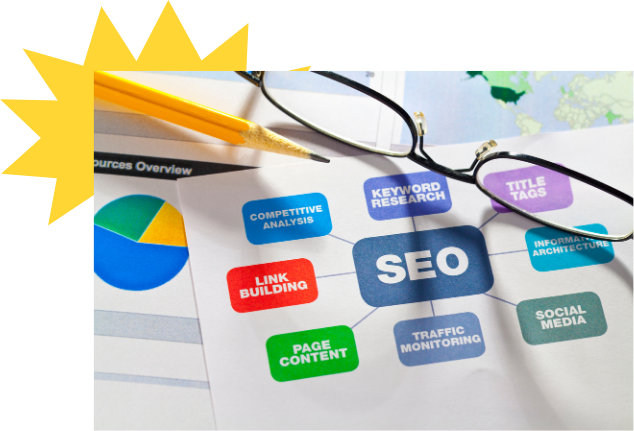
    In 2026, SEO is no longer just keywords and rankings. SEO is structure, content, speed, clarity, trust and digital presence.

    SEO is no longer just search engine optimization. It is how your business exists on the internet.

    Because at the end of the day, SEO is not about Google. It is about being found when someone needs what you do.

    And if your website is not helping that happen yet, then maybe your website needs SEO.

    If you want to improve the SEO of your website or understand how to position your business better online, you can contact us. At Pixel Beaver, we’ll be happy to help.

    #SEO #WebsiteStrategy #DigitalStrategy #PixelBeaver #WebDevelopment

  • Social Media Is Where People Discover You. A Website Is Where They Decide To Work With You.

    Social Media Is Where People Discover You. A Website Is Where They Decide To Work With You.

    Today, building a personal brand usually means building a social media presence. Instagram, LinkedIn, TikTok, YouTube — we post content, share projects, show our work, and grow an audience.

    And that’s important. Social media is incredibly powerful for visibility.

    But something interesting happens when someone is not just curious about you, but actually interested in working with you, hiring you, collaborating with you, or taking you seriously professionally.

    They don’t scroll your Instagram for hours. They search your name on Google.

    And what they find there defines your professional image.

    This was exactly the starting point when we began working on the website for Génesis Fátima, actress, creative professional, and teacher.

    Like many creative professionals, most of her work already existed online — photos, videos, projects, collaborations — but everything was scattered across different platforms. There was no single place that clearly explained who she is, what she does, and how to contact her professionally.

    So the goal was not just to build a website. The goal was to build a professional online home for her personal brand.

    When we design websites for businesses or personal brands, we don’t start with colors or fonts. We start with questions: What do you want people to understand when they arrive? What do you want them to feel? What kind of projects do you want to attract? What should people do after visiting your website?

    A website is not just pages and sections. It is a guided experience.

    We structured the website like a journey: first impression, then personal story, then experience and areas of work, then portfolio and projects, and finally contact. Each section answers a question in the visitor’s mind and slowly builds trust.

    Because most websites don’t fail because of design. They fail because of lack of clarity and structure.

    Another important idea we always share with clients is this: a website is not finished when it is published. In reality, a website starts when it is published. Once it is online, we can measure how people use it, where they click, how much they scroll, and how many people contact. Then the website can evolve and improve over time.

    For personal brands, this is especially important.

    Social media is where people discover you. But your website is where people understand you, see your work, read about you, and decide if they want to work with you.

    You don’t own Instagram or LinkedIn. But you do own your website.

    And for a personal brand, having a space that you control, that represents you, and that grows with you professionally is incredibly valuable.

    If you are building a personal brand or a business and you feel your website could do more than just exist, we would love to help.

    At Pixel Beaver, we build websites with strategy, structure, and purpose — not just design.

    #PersonalBrand #WebsiteStrategy #PixelBeaver #DigitalStrategy #WebDesign

  • How to Turn a Website Into a Lead-Generating Machine

    How to Turn a Website Into a Lead-Generating Machine

    Many businesses invest in websites, SEO, and advertising to bring traffic to their site. But traffic alone does not grow a business.

    What matters is conversion.

    A website that receives visitors but does not generate enquiries, leads, or sales is not a business asset — it is just an online brochure.

    The difference between a website that looks good and a website that generates business usually comes down to strategy, structure, and user experience.

    Conversion Starts With Clarity

    The first reason many websites fail to convert is simple: visitors do not immediately understand what the business does, who it is for, and what they should do next.

    When someone lands on your website, they should be able to answer three questions within a few seconds:

    What does this company do? Is this for me? What should I do next?

    If the website does not answer these questions clearly, most visitors will leave.

    A strong website always starts with a clear value proposition and a clear call to action.

    Structure Matters More Than Design

    Many companies focus heavily on colors, animations, and visual style, but structure has a much bigger impact on conversion.

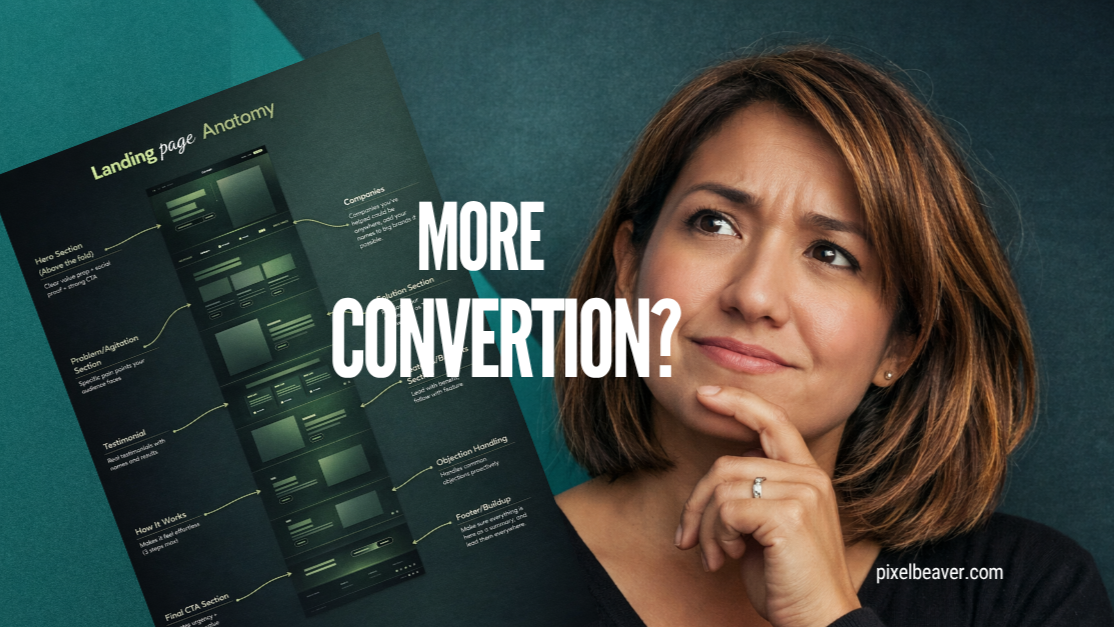
    High-converting websites usually follow a logical flow that guides the visitor step by step:

    1. Clear headline and value proposition
    2. The problem the client is facing
    3. Your solution
    4. Benefits and outcomes
    5. Social proof and credibility
    6. Explanation of the process
    7. Objection handling
    8. Clear call to action

    This structure reduces confusion and helps visitors move from interest to action.

    Good website design is not about decoration. It is about guiding decisions.

    Reduce Friction Everywhere

    One of the biggest conversion killers is friction.

    Friction appears when:

    • Forms are too long
    • Navigation is confusing
    • The website is slow
    • The message is unclear
    • There are too many options
    • Mobile experience is poor

    Every extra step or moment of confusion increases the chance that a visitor leaves.

    High-converting websites remove friction and make taking action feel easy.

    Trust Is a Conversion Multiplier

    People rarely contact or buy from a company they do not trust.

    That is why trust signals are critical for conversion. These can include:

    • Client testimonials
    • Case studies
    • Client logos
    • Reviews
    • Results and metrics
    • Team photos
    • Clear process
    • Guarantees

    Trust reduces risk in the visitor’s mind and makes contacting the business feel like a safe decision.

    Mobile and Speed Are Not Optional

    Today, a large percentage of website traffic comes from mobile devices.

    If a website is difficult to use on a phone, slow to load, or hard to read, conversion rates drop significantly.

    Buttons must be easy to tap. Text must be readable. Forms must be simple. Pages must load quickly.

    A beautiful desktop website that performs poorly on mobile will almost always lose conversions.

    Measure, Improve, Repeat

    Launching a website is not the end of the process. It is the beginning.

    Businesses that get the best results from their websites track:

    • Conversion rate
    • Form submissions
    • Clicks on calls to action
    • Time on page
    • Bounce rate

    Then they improve the site over time by testing headlines, layouts, forms, and calls to action.

    Website optimisation is an ongoing process, not a one-time project.

    A Website Should Be a Business Tool

    A website should not just exist. It should work.

    It should attract the right audience, explain the value clearly, build trust, and guide visitors toward taking action.

    When strategy, design, development, and automation work together, a website stops being just a website and becomes a system that supports business growth.

    If you already have a website and feel it could perform better, it might not need more traffic — it might need a better structure.

    At Pixel Beaver, we help businesses redesign and build websites focused on conversion, clarity, and growth.

    If you’d like us to review your website or help you redesign it, feel free to reach out. We’re always happy to take a look.